

📋 Table of Contents
Cats have a longstanding cultural reputation as independent animals who don’t mind being left alone, but veterinary behaviorists increasingly recognize separation-related problem behavior as a genuine and likely under-diagnosed issue, estimated to affect a meaningful minority of pet cats. Because the signs are often subtle or mistaken for “bad behavior,” many cases go unrecognized by owners.
Do Cats Really Get Separation Anxiety?
Yes. Veterinary behavior research has documented a cluster of behaviors in cats that occur specifically around an owner’s absence and resolve upon return, consistent with a genuine separation-related response rather than random misbehavior. It’s less studied than canine separation anxiety, but is increasingly recognized as a real welfare concern, particularly in cats that are highly bonded to a single owner or that experienced early-life instability.
Signs of Separation Anxiety in Cats
- Excessive vocalization when the owner prepares to leave or immediately after departure.
- Inappropriate urination or defecation, often specifically on items with the owner’s scent, like bedding or clothing, and only when left alone.
- Excessive grooming or fur pulling, sometimes to the point of bald patches, which is a self-soothing behavior in anxious cats.
- Destructive behavior around doors or windows, particularly near where the owner exited.
- Changes in appetite, either eating less while alone or eating very quickly upon the owner’s return.
- Excessive greeting behavior that seems disproportionate, such as prolonged, intense meowing or clinginess for an extended period after the owner returns.
- Vomiting, which can occur as a stress response in some anxious cats specifically tied to being left alone.
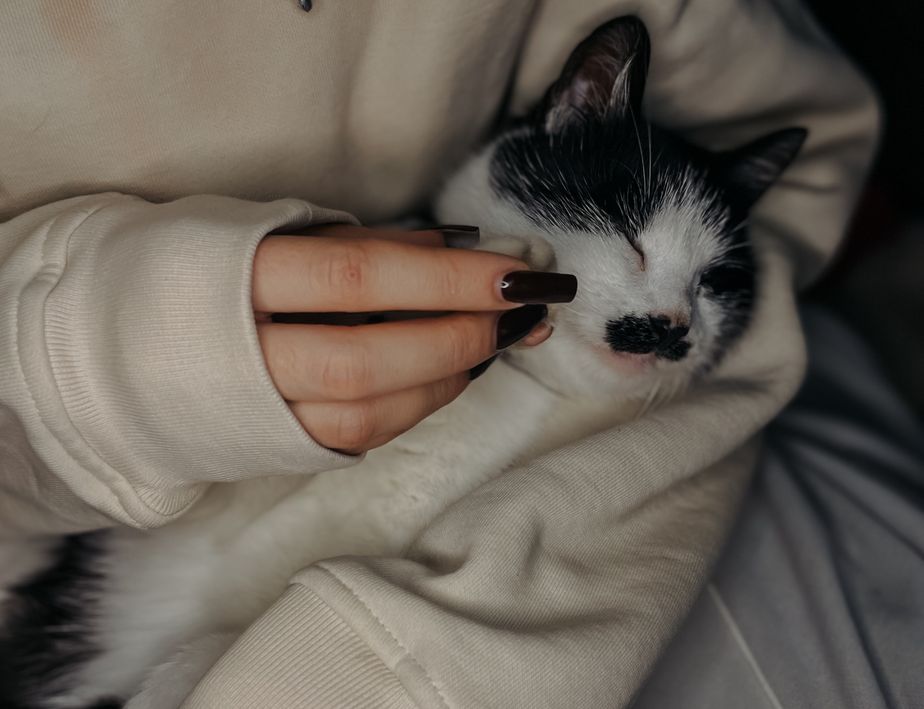
Strong attachment to a single person can be a risk factor for separation-related distress in cats. Photo: Pexels
What Causes It
Risk factors identified in veterinary behavior research include early weaning or separation from the mother, a history of abandonment or multiple rehoming, being an only cat with strong attachment to a single person, and major household changes like a move, a new pet, or a change in the owner’s schedule. Cats that were hand-raised or bottle-fed as kittens may also be at somewhat higher risk, likely due to the intensity of the human-animal bond formed very early in life.
How to Help Your Cat Cope
1. Build Departure and Return Routines That Don’t Overexcite
Keeping departures and arrivals low-key, rather than an intense goodbye or an excited greeting, helps reduce the emotional spike associated with these transitions over time.
2. Enrich the Environment
Puzzle feeders, window perches, and rotating toys give cats something engaging to focus on while alone, reducing anxiety-driven behaviors linked to boredom and understimulation.
3. Leave Worn Clothing With Your Scent
A worn t-shirt or blanket with the owner’s scent can have a calming effect for cats who show attachment-related anxiety, providing a sense of continued presence.
4. Consider a Second Cat, Carefully
For some cats, a compatible companion can reduce loneliness-driven anxiety, though this isn’t guaranteed to help and should be introduced gradually, since a poor match can add stress instead.
5. Use Pheromone Diffusers
Synthetic feline facial pheromone diffusers are commonly recommended by veterinary behaviorists as a low-risk, evidence-supported tool to help reduce general anxiety in cats, including separation-related distress.
Puzzle feeders, window perches, and pheromone diffusers to help reduce feline separation anxiety.
When to See a Vet
Because many separation anxiety symptoms (like inappropriate elimination, vomiting, or over-grooming) overlap with medical conditions, a veterinary visit is an important first step to rule out underlying health issues before assuming the cause is purely behavioral. If a medical cause is ruled out, some vets may recommend a referral to a veterinary behaviorist for more involved cases, and in some situations, anti-anxiety medication alongside behavioral strategies.
Frequently Asked Questions
How common is separation anxiety in cats?
Exact prevalence is hard to pin down since it’s less studied than in dogs, but veterinary behavior researchers estimate it affects a meaningful minority of pet cats, and likely more than is currently diagnosed, since symptoms are often subtle or mistaken for other issues.
Can separation anxiety in cats be cured?
Many cats show significant improvement with consistent environmental enrichment, routine adjustments, and in some cases professional behavioral support or medication, though ‘cure’ may be less accurate than ‘well-managed,’ similar to anxiety conditions in other species.
Is it cruel to leave my cat alone during the workday?
Not inherently. Most cats tolerate typical daily alone time well when their environment is enriched and their needs are met. Separation anxiety specifically refers to a distressed response beyond normal independent behavior, not simply being left alone for a standard workday.
References:



Leave a Reply