

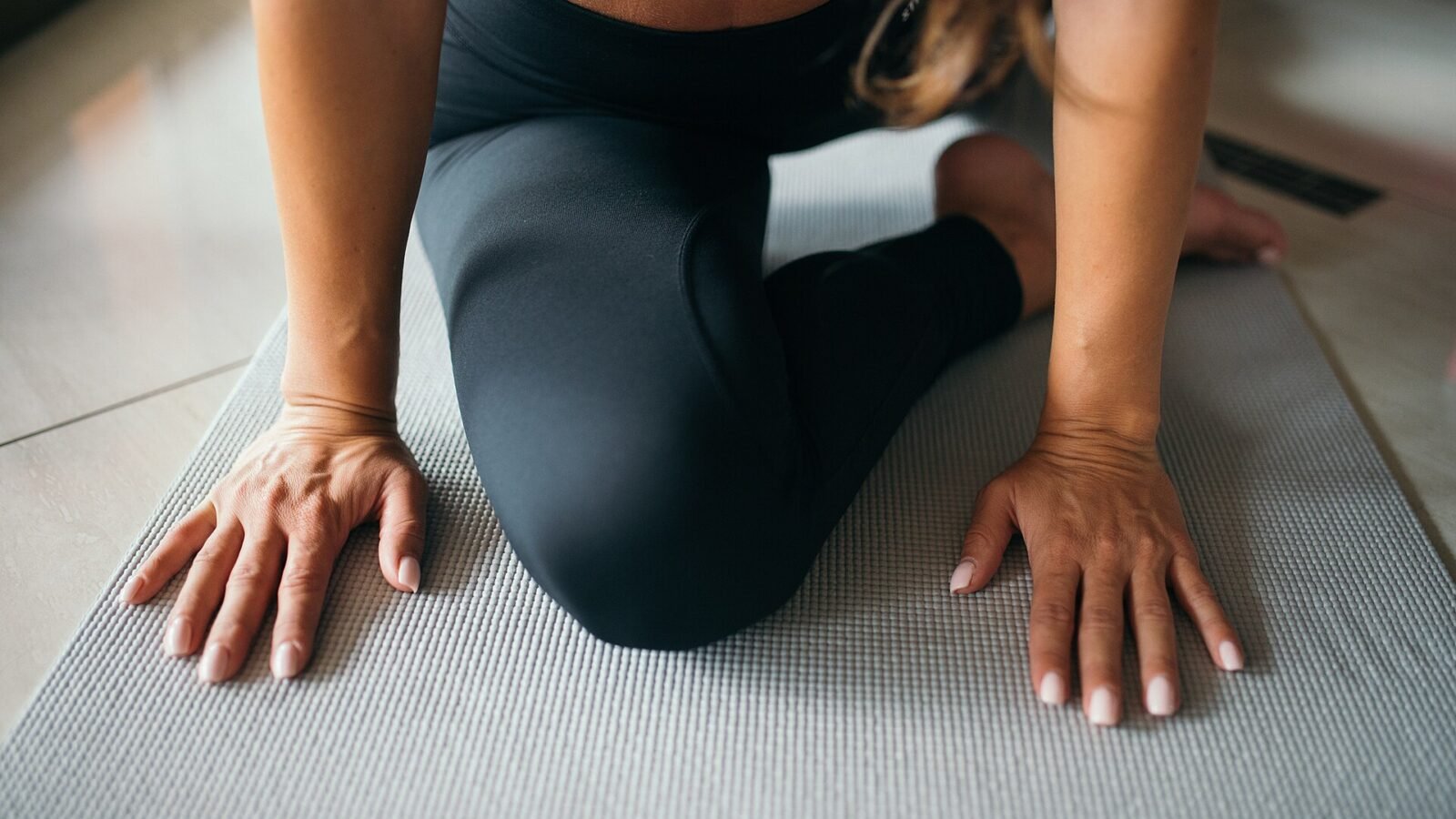
Mobility training means practising controlled movement through a joint’s full usable range, with strength and control, rather than passively pulling a muscle to make it longer. It matters because stiff, restricted joints change how you move, and poor movement quality is linked to falls, aches and reduced independence with age. A short daily routine — around ten minutes of targeted, named movements — can improve how you feel and function, especially if you sit for long hours.
Mobility has become a wellness buzzword, but the underlying idea is simple: your body is designed to move through a range of positions, and modern life narrows that range. Hours at a desk, long commutes and screen time leave hips, shoulders, neck and ankles stiff. Over years, that stiffness can make everyday movement harder and less comfortable.
The good news is that mobility responds well to short, consistent practice. You do not need an hour of stretching or a gym membership. Ten focused minutes a day, done most days, is a realistic starting point for most people.
This guide separates mobility from flexibility and stretching, reviews what the evidence supports, gives a complete 10-minute routine with named moves, and explains when pain is a signal to stop rather than push.
Medical Disclaimer: This article is for informational and educational purposes only and does not constitute medical advice. Always consult a qualified healthcare professional before starting a new exercise programme, especially if you have an injury, joint condition or chronic illness. Stop if a movement causes sharp pain.
Mobility vs Flexibility vs Stretching
These terms are often used interchangeably, but they describe different things, and understanding the difference changes how you train.
- Flexibility is the passive length of a muscle or the range a joint can reach with outside help — for example, how far someone can push your leg towards your chest while you relax.
- Mobility is active, controlled range you can access and use yourself. It combines joint range, muscle strength, coordination and the nervous system’s willingness to allow the movement.
- Stretching is one tool — a method of briefly lengthening tissue — that can contribute to flexibility and, indirectly, mobility.
A gymnast and a person who can be pushed into a deep stretch may have similar flexibility, but only the gymnast can control and use that range. That control is what reduces injury risk and improves daily function. Mobility work therefore often looks less like long held stretches and more like slow, deliberate repetitions.
Why Mobility Training Matters
Movement quality affects almost everything you do, from getting off the floor to reaching overhead or climbing stairs. Research links regular mobility and balance work to better physical function and a lower risk of falls in older adults. For younger and middle-aged adults, the benefits show up as less stiffness, better posture and more comfortable training.
Key benefits include:
- Joint health. Joints are nourished by movement. Regular, controlled range helps maintain cartilage health and synovial fluid circulation.
- Posture and desk-related strain. Desk work shortens hip flexors and tightens the chest, upper back and neck. Mobility work counteracts this pattern.
- Injury prevention. Adequate ankle, hip and shoulder range helps you absorb force and move safely in sport and daily life.
- Healthy ageing. Maintaining the ability to reach, bend, squat and rotate supports independence later in life. The World Health Organization recommends regular physical activity, including balance and strength work, for older adults.
- Better training results. If you cannot reach a position, you cannot train it well. Mobility supports strength training for beginners by improving the positions available to you.
- Mind-body connection. Slow, deliberate movement also calms the nervous system. The principles overlap with somatic exercises for nervous system regulation.
What the Research Says
The evidence base for mobility training is strongest in older adults and rehabilitation. Systematic reviews of exercise programmes that include balance, flexibility and strength consistently show improvements in physical function and reduced fall risk. The PubMed literature on mobility training reflects this broad support.
For healthy younger adults, the picture is more nuanced. Stretching alone has modest effects on performance and injury prevention; the benefits are larger when mobility work is paired with strengthening. The Mayo Clinic stretching guidance makes the same practical point: stretching is most useful as part of a broader activity programme, not as a standalone cure.
Static stretching immediately before explosive activity may temporarily reduce power output, so save longer holds for after training or separate sessions, and use dynamic mobility drills before activity. Evidence on foam rolling and other tools is mixed but generally suggests small, short-term improvements in range and soreness. They are optional extras, not necessities.
The 10-Minute Daily Mobility Routine
This routine targets the areas that stiffen most from sitting: hips, thoracic spine, shoulders, ankles and neck. Move slowly, breathe, and stay within a comfortable range. Do each move for about 45–60 seconds, roughly eight repetitions where relevant. The whole sequence takes about ten minutes.
| Move | Target area | How to do it |
|---|---|---|
| Cat–cow | Spine | On all fours, alternate arching and rounding the spine, moving slowly with the breath. |
| Thoracic rotation (open book) | Upper back | Lie on your side, knees bent, and slowly open the top arm across your body, following it with your eyes. |
| World’s greatest stretch | Hips, hamstrings, thoracic spine | From a lunge, place the same-side hand down and rotate the other arm to the ceiling. |
| 90/90 hip switches | Hips | Sit with one knee in front at 90 degrees and one to the side at 90 degrees; rotate slowly to switch sides. |
| Ankle dorsiflexion rocks | Ankles | Kneel with one foot flat; drive the knee forward over the toes without lifting the heel. |
| Shoulder wall slides | Shoulders, upper back | Stand with back to a wall, arms in a goalpost shape; slide them up and down keeping contact. |
| Neck rotations and chin tucks | Neck | Slowly turn the head side to side, then gently draw the chin straight back. |
| Deep squat hold | Hips, ankles, groin | Squat as low as comfortable and hold, using support if needed. |
If you only have five minutes, do cat–cow, the world’s greatest stretch, 90/90 switches and wall slides. Consistency beats duration.
How to Progress Safely
Progress in mobility comes from gradually asking for more controlled range, not from forcing a stretch. A simple approach:
- Week 1–2: learn the moves and stay well within comfort.
- Week 3–4: increase the range slightly and slow the tempo, pausing at the end range.
- Week 5+: add light load or strength at end range — for example, a lunge with a slow reach, or a squat hold with a small weight.
- Ongoing: keep the daily short session and add one longer, 20–30 minute session weekly.
Pairing mobility with walking and strength work gives the best overall results. If you enjoy routine-based movement, our home workout routines guide and snack-sized workouts show how ten-minute blocks add up. Walking, as covered in benefits of walking 30 minutes a day, complements mobility by keeping joints moving under low load. Yoga is another accessible route; see yoga for beginners.
Mobility for Indian Desk Workers
Long commutes, traffic, air-conditioned offices and hours in front of screens create a predictable stiffness pattern: tight hip flexors, rounded shoulders, a stiff upper back and a forward head. Add the heat of an Indian summer, when outdoor activity drops, and the problem compounds.
Practical adaptations:
- Take a two-minute movement break every 45–60 minutes; stand, walk and reach overhead.
- Use your commute or lunch break for a walk, even indoors if air quality is poor.
- Do the ten-minute routine after work or before bed rather than trying to find an hour.
- If you work from home, set up so your screen is at eye level and your feet are flat; no routine can fully offset poor setup.
- Be mindful of heat; do mobility work in a cool, well-ventilated space during summer.
When Not to Push Through Pain
Mobility work should feel like gentle tension, not pain. Stop and seek assessment if you notice:
- A joint that locks, catches or gives way.
- Swelling, warmth or redness around a joint.
- Sharp pain that stops the movement.
- Pain, numbness or tingling that radiates down an arm or leg.
- Pain that worsens at night or persists despite rest.
- Sudden loss of range after an injury.
These are not things to stretch away. “No pain, no gain” is poor advice for joints and nerves, where pain is a protective signal. Pushing into nerve pain, in particular, can make symptoms worse.
Practical Recommendations
- Do the 10-minute routine most days rather than one long session occasionally.
- Move slowly and breathe; never bounce or force a joint.
- Prioritise the areas you actually use least: hips, upper back, ankles and shoulders.
- Pair mobility with strength and walking for best function.
- Use dynamic moves before activity and longer holds after.
- Progress by adding range and control, then light load.
- Take movement breaks during desk work.
- Stop at pain; seek help for locking, swelling or radiating symptoms.
- Be patient — meaningful change usually takes several weeks of consistency.
Who Should Be Cautious
- People with recent fractures, surgery or ligament injuries.
- People with inflammatory arthritis or active joint swelling.
- People with osteoporosis, who should avoid forceful end-range spinal movement without advice.
- People with nerve pain, sciatica or disc-related symptoms.
- Pregnant women, who should avoid deep abdominal strain and certain positions later in pregnancy.
- Older adults with a history of falls, who should train near support and seek guidance.
- Anyone with hypermobility, for whom “more range” is not the goal; control is.
When to Seek Professional Medical Advice
See a doctor or physiotherapist if pain lasts more than a couple of weeks, limits daily activity, disturbs sleep or follows an injury. Physiotherapists can assess which specific restriction is limiting you and prescribe targeted exercises far more effectively than generic routines.
Seek urgent care for severe pain, an obviously deformed joint, inability to bear weight, loss of bladder or bowel control with back pain, or progressive weakness or numbness in the legs. These can indicate serious problems that need prompt assessment.
Frequently Asked Questions
How is mobility different from flexibility?
Flexibility is passive range, often measured with help. Mobility is active range you can control yourself, combining joint range with strength and coordination. Mobility is generally more useful for daily function and sport.
How long does it take to see results?
Many people notice less stiffness within one to two weeks of daily practice. Meaningful, lasting changes in range and control usually take four to eight weeks of consistent work.
Can I do mobility training every day?
Yes. Gentle daily mobility is generally safe and effective. Intense end-range work or heavy loaded stretching is better spaced out to allow recovery.
Should I stretch before or after exercise?
Use dynamic mobility drills before activity to prepare, and save longer static holds for afterwards or separate sessions. Prolonged static stretching right before explosive activity may briefly reduce power.
Does foam rolling help mobility?
Evidence suggests small, short-term improvements in range of motion and perceived soreness. It can be a useful addition, but it does not replace active mobility and strengthening.
Can mobility training help lower back pain?
It can help when stiffness or poor hip and thoracic movement contributes to the problem. Persistent or severe back pain should be assessed, because causes vary and exercise needs to be tailored.
Is yoga a form of mobility training?
Yoga includes mobility, flexibility, balance and strength elements, so it can work well. A targeted mobility routine is simply another way to get similar benefits.
What if I am very stiff and cannot do the moves?
Use props and reduce range. Hold a chair, do seated versions, or place a cushion under your knees. Start where you are and progress gradually rather than forcing positions.
References
- World Health Organization. “Physical Activity.” WHO Fact Sheet, 2024. https://www.who.int/news-room/fact-sheets/detail/physical-activity
- NHS. “Flexibility Exercises.” https://www.nhs.uk/live-well/exercise/flexibility-exercises/
- Mayo Clinic. “Stretching: Focus on Flexibility.” https://www.mayoclinic.org/healthy-lifestyle/fitness/in-depth/stretching/art-20047931
- Harvard Health Publishing. “The Importance of Stretching.” https://www.health.harvard.edu/staying-healthy/the-importance-of-stretching
- MedlinePlus (U.S. National Library of Medicine). “Exercise and Physical Fitness.” https://medlineplus.gov/exerciseandphysicalfitness.html
- PubMed (U.S. National Library of Medicine). Search results for “mobility training older adults.” https://pubmed.ncbi.nlm.nih.gov/?term=mobility+training+older+adults
Related Reading:




Leave a Reply