

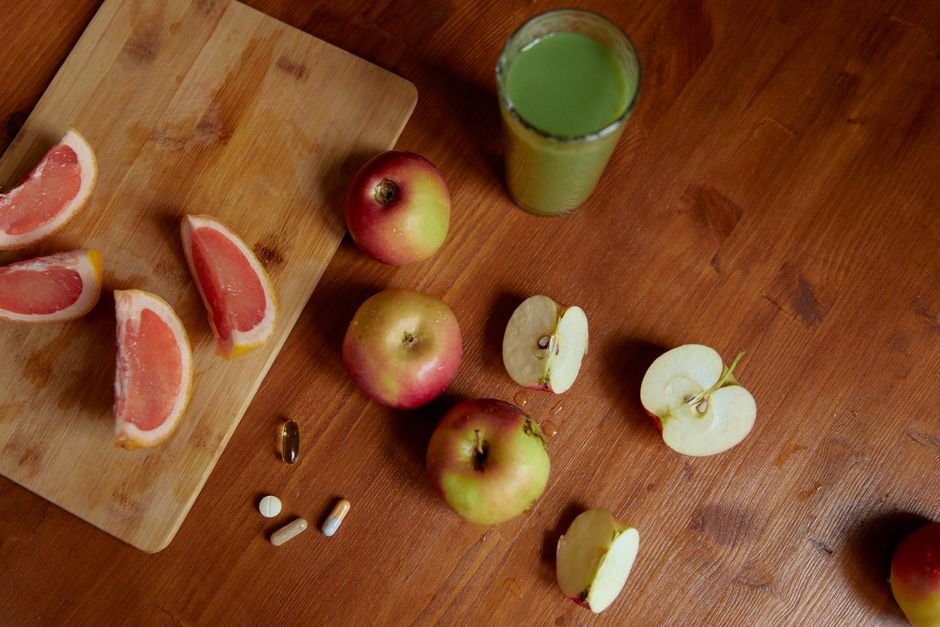
Your skincare routine matters, but what you eat plays an equally important, often underestimated role in how your skin ages. Collagen — the structural protein that keeps skin firm, elastic, and smooth — declines naturally with age, but specific foods can support the body’s own collagen production process.
What Is Collagen and Why Does It Matter?
Collagen is the most abundant protein in the human body, forming a structural scaffold in skin, bones, tendons, and connective tissue. In skin specifically, collagen provides firmness and elasticity, while its breakdown over time — beginning as early as your mid-20s, with production declining roughly 1% per year after that — leads to the wrinkles, sagging, and loss of firmness commonly associated with aging skin.
Importantly, you don’t consume collagen directly and have it deposit into your skin. Instead, certain foods provide the specific building blocks (amino acids) and cofactors (vitamins and minerals) your body needs to synthesize its own collagen efficiently — a distinction worth understanding before diving into specific food recommendations.
5 Best Foods to Boost Collagen Production
1. Bone Broth
Made by simmering animal bones and connective tissue for extended periods, bone broth contains collagen itself along with amino acids like glycine and proline, the primary building blocks of collagen protein. While the collagen in bone broth is broken down during digestion rather than absorbed intact, it provides a concentrated source of the amino acids your body uses to build new collagen.
2. Citrus Fruits
Vitamin C is an essential cofactor for collagen synthesis — without adequate vitamin C, the body cannot properly cross-link collagen fibers into strong, stable structures, regardless of how much protein you consume. Oranges, lemons, and grapefruits provide substantial vitamin C alongside antioxidants that help protect existing collagen from oxidative breakdown. For a deeper look at citrus and skin health specifically, see our guide to foods that support glowing, healthy skin.
3. Berries
Beyond their vitamin C content, berries provide anthocyanins and other polyphenols that help protect collagen fibers from the enzymatic breakdown (via enzymes called matrix metalloproteinases) accelerated by UV exposure and oxidative stress.
4. Eggs
Egg whites contain proline, one of the key amino acids needed for collagen production, while the whole egg provides sulfur, a mineral involved in collagen cross-linking and overall connective tissue health.
5. Leafy Greens
Spinach and kale provide vitamin C alongside chlorophyll, which some preliminary research suggests may have antioxidant properties relevant to skin protection, complementing their broader nutrient density for overall skin health.
What About Collagen Supplements?
Hydrolyzed collagen supplements (collagen peptides) have grown enormously popular, and a number of clinical trials have found modest improvements in skin elasticity and hydration with consistent supplementation over 8-12 weeks. The research area is still developing, and effect sizes vary across studies, but current evidence suggests supplements can be a reasonable complementary option alongside, not instead of, a collagen-supportive diet.
Beyond Diet: Other Factors That Affect Collagen
Diet is only one piece of the collagen puzzle. UV exposure is the single largest accelerant of collagen breakdown, making daily sunscreen use arguably more impactful than any dietary change alone. Smoking, chronic high sugar intake (which contributes to a process called glycation that damages collagen fibers), and inadequate sleep all independently accelerate collagen loss, meaning a collagen-supportive diet works best as part of a broader skin-health approach rather than in isolation.
A Realistic Timeline for Results
Because collagen turnover is a gradual biological process, dietary changes typically take 8-12 weeks of consistency before producing measurable improvements in skin firmness or texture — this mirrors the timeline used in most clinical trials on both collagen-supportive diets and supplements, and is worth keeping in mind to avoid discouragement from expecting faster results.
Frequently Asked Questions
Does eating collagen-rich foods actually increase collagen in my skin?
Not directly — dietary collagen and collagen-supportive nutrients are broken down into amino acids during digestion and used by your body to synthesize its own collagen, rather than being deposited directly into skin tissue. This process still meaningfully supports collagen production, but it’s a supportive, indirect mechanism rather than a direct transfer.
Are collagen supplements worth taking alongside a collagen-supportive diet?
Clinical research shows modest benefits for skin elasticity and hydration from hydrolyzed collagen supplements after consistent use over 8-12 weeks. They can be a reasonable complementary addition, though a nutrient-dense diet remains the foundational approach, with supplements as an optional add-on rather than a necessity.
What’s more important for collagen: diet or sun protection?
Sun protection likely has a larger overall impact, since UV exposure is the single biggest accelerant of collagen breakdown in skin. Diet and sun protection work best together — a collagen-supportive diet without sun protection will have limited visible benefit if UV damage continues unchecked.
Subscribe Free →




Leave a Reply