

📋 Table of Contents
The hashtag #skinflooding has racked up more than 80 million views on TikTok, and unlike some viral skincare trends, dermatologists have largely embraced this one. Skin flooding is a hydration-focused routine built on a genuinely sound principle borrowed from Korean skincare: layering water-based, humectant-rich products onto damp skin, from thinnest to thickest, to maximize how much moisture the skin actually absorbs and retains. Unlike trends that promise dramatic transformation through a single miracle product, skin flooding is refreshingly straightforward: it’s a technique, not a product, which means it can be adapted to almost any budget or existing skincare collection.
What Is Skin Flooding?
Skin flooding means deliberately “flooding” the skin with several layers of hydrating product in quick succession, applied to damp rather than dry skin, and sealed in with a moisturizer at the end. The name comes from the sensation and visual effect of the skin appearing plumped and saturated with moisture, distinct from a standard routine where a single moisturizer is applied once to dry skin.
The K-Beauty Roots of the Trend
The core technique isn’t new; it’s a repackaged, TikTok-friendly version of layering principles that have been central to Korean skincare for years, related to techniques like the “7 skin method” (patting on up to seven layers of toner or essence) and the broader K-beauty emphasis on achieving “chok-chok” (bouncy, dewy, well-hydrated) skin. What’s changed is the branding and the level of mainstream Western attention, driven heavily by short-form video demonstrations. This pattern, a longstanding K-beauty technique getting rebranded with a catchy English name and going viral on social media, has repeated itself several times in recent years, following a similar arc to how “glass skin” and “skinimalism” each brought existing Korean skincare philosophies to a much wider Western audience than they’d previously reached.
Why Layering on Damp Skin Actually Works
The technique has a real physiological basis. Starting with damp rather than fully dry skin allows subsequent water-based products to be drawn more easily into the skin’s outer layers, since the skin’s surface is already primed for hydration rather than needing to first overcome dryness. Layering multiple lighter, water-based products (like a hydrating toner or essence, followed by a hyaluronic acid serum) before a final moisturizer allows each layer’s humectant ingredients, most commonly hyaluronic acid, to draw and hold additional water in the skin. The final moisturizing step then seals that hydration in, reducing transepidermal water loss (the technical term for water evaporating out through the skin) that would otherwise occur overnight or throughout the day.
The “thinnest to thickest” layering order matters more than it might seem. Heavier, oil-based products applied first can form a barrier on the skin’s surface that prevents thinner, water-based products applied afterward from penetrating at all, effectively wasting the hydrating potential of everything layered on top. This is also why dermatologists emphasize patting products in gently rather than rubbing, since vigorous rubbing can disrupt the thin hydration layer being built with each step rather than helping it absorb. Some skincare formulators have also pointed out that skin flooding works partly because it maximizes contact time between hydrating ingredients and the skin’s surface: rather than applying a single moisturizer once and expecting it to do all the work, the multi-step layering approach effectively gives the skin several separate opportunities to absorb water-binding ingredients before the final seal, which is a meaningfully different delivery mechanism than a one-and-done moisturizing step.
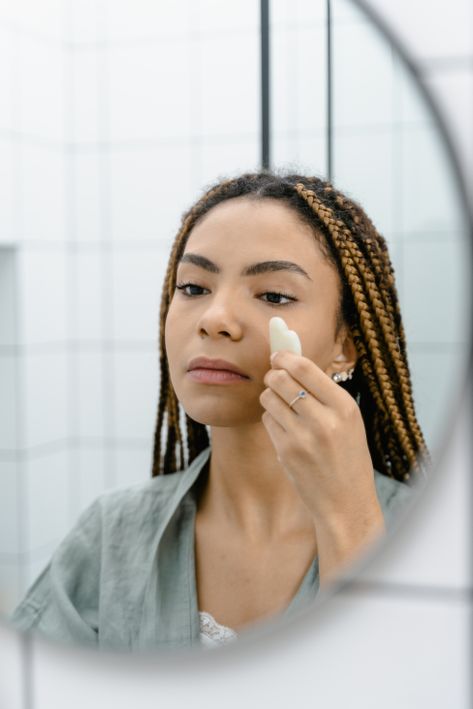
Layering thinnest to thickest, starting on damp skin, is the core technical principle behind skin flooding. Photo: Pexels
How to Do a Skin Flooding Routine, Step by Step
- Cleanse gently and leave skin damp rather than towel-drying completely.
- Mist or dampen further with a facial spray or a splash of water if needed, since starting genuinely damp (not just recently washed) improves absorption of the next layers.
- Apply a hydrating toner or essence, patting rather than rubbing it in, and allow it to mostly absorb.
- Layer a hyaluronic acid serum, the ingredient most central to the technique’s water-binding effect.
- Add a targeted serum if you have a specific concern (brightening, texture, etc.), applied while skin is still slightly damp from the prior steps.
- Seal everything in with a moisturizer, choosing a heavier cream or adding a facial oil on top if your skin is on the drier side.
- Optional: add an occlusive layer such as a hydrating balm for very dry skin, particularly for a nighttime routine.
The whole routine is best done at night, since skin loses moisture more readily during sleep, making it an effective way to wake up with visibly plumper, better-hydrated skin.
K-beauty-inspired toners, essences, and hyaluronic acid serums for a skin flooding routine.
Who Benefits Most
Dermatologists note that while skin flooding is broadly suitable for most skin types, it tends to deliver the most noticeable improvement for dry, dehydrated, or aging skin, where hydration deficits are the primary concern driving dullness or fine lines. Oily and breakout-prone skin can also benefit, somewhat counterintuitively, since dehydrated skin (a lack of water, distinct from a lack of oil) can trigger the skin to overproduce oil as a compensatory response; adequately hydrating the skin can help regulate this cycle for some people.
Key Ingredients to Look For
Not every “hydrating” product is equally suited to a skin flooding routine. A few ingredient categories do most of the work:
- Humectants like hyaluronic acid, glycerin, and panthenol draw water into the skin from the environment and from deeper skin layers, and are the core active category for the routine’s layering steps.
- Fermented ingredients, common in Korean toners and essences, are prized in K-beauty formulations for being lightweight enough to layer in multiple thin coats without feeling heavy, which fits the routine’s thinnest-to-thickest structure.
- Ceramides, found in many finishing moisturizers, help reinforce the skin’s barrier, which is what allows all the hydration layered underneath to actually stay put rather than evaporating overnight.
- Squalane and other emollients are useful as an optional final occlusive layer for very dry skin, since they help physically slow water loss through the skin’s outer surface without clogging pores for most skin types.
Fragrance-heavy or high-alcohol products are worth avoiding specifically within a skin flooding routine, even if they’re tolerated fine elsewhere in your regimen, since the technique is designed to increase how much product penetrates the skin, which also means it increases the potential for irritation from harsher ingredients.
Common Mistakes to Avoid
The most common mistake is skipping the final moisturizing or occlusive step, which allows all the carefully layered hydration to evaporate rather than being sealed in, defeating much of the routine’s purpose. A second common mistake is using products with a high concentration of alcohol or fragrance in the early layering steps, which can irritate skin that’s being deliberately kept damp and more permeable. Layering too many active ingredients (like retinoids or strong acids) into a skin flooding routine can also increase irritation risk, since enhanced product absorption cuts both ways; it’s generally best to keep a skin flooding routine focused on hydrating, non-active ingredients, saving retinoids and exfoliants for a separate part of your regimen.
Frequently Asked Questions
Can I use retinol with a skin flooding routine?
It’s generally best to keep skin flooding focused on hydrating, non-active ingredients and use retinol on separate nights or as part of a different step, since the enhanced absorption from layering on damp skin can increase irritation from active ingredients like retinoids.
How long does it take to see results from skin flooding?
Many people notice a visible plumping and glow effect immediately after a single session, since the technique works by temporarily maximizing water content in the skin’s outer layers. More lasting improvements in overall skin hydration and texture typically build with consistent nightly use over several weeks.
Is skin flooding good for oily skin?
Yes, for many people. Dehydration (lack of water) is distinct from oiliness (excess sebum), and adequately hydrating oily or dehydrated-but-oily skin can sometimes help regulate excess oil production that occurs as a compensatory response to dehydration.
Do I need expensive products to try skin flooding?
No. The technique itself, layering thin, water-based hydrating products on damp skin before sealing with a moisturizer, works with affordable drugstore products just as well as prestige K-beauty brands, since the layering method and ingredient function matter more than price point.
References:
Leave a Reply