

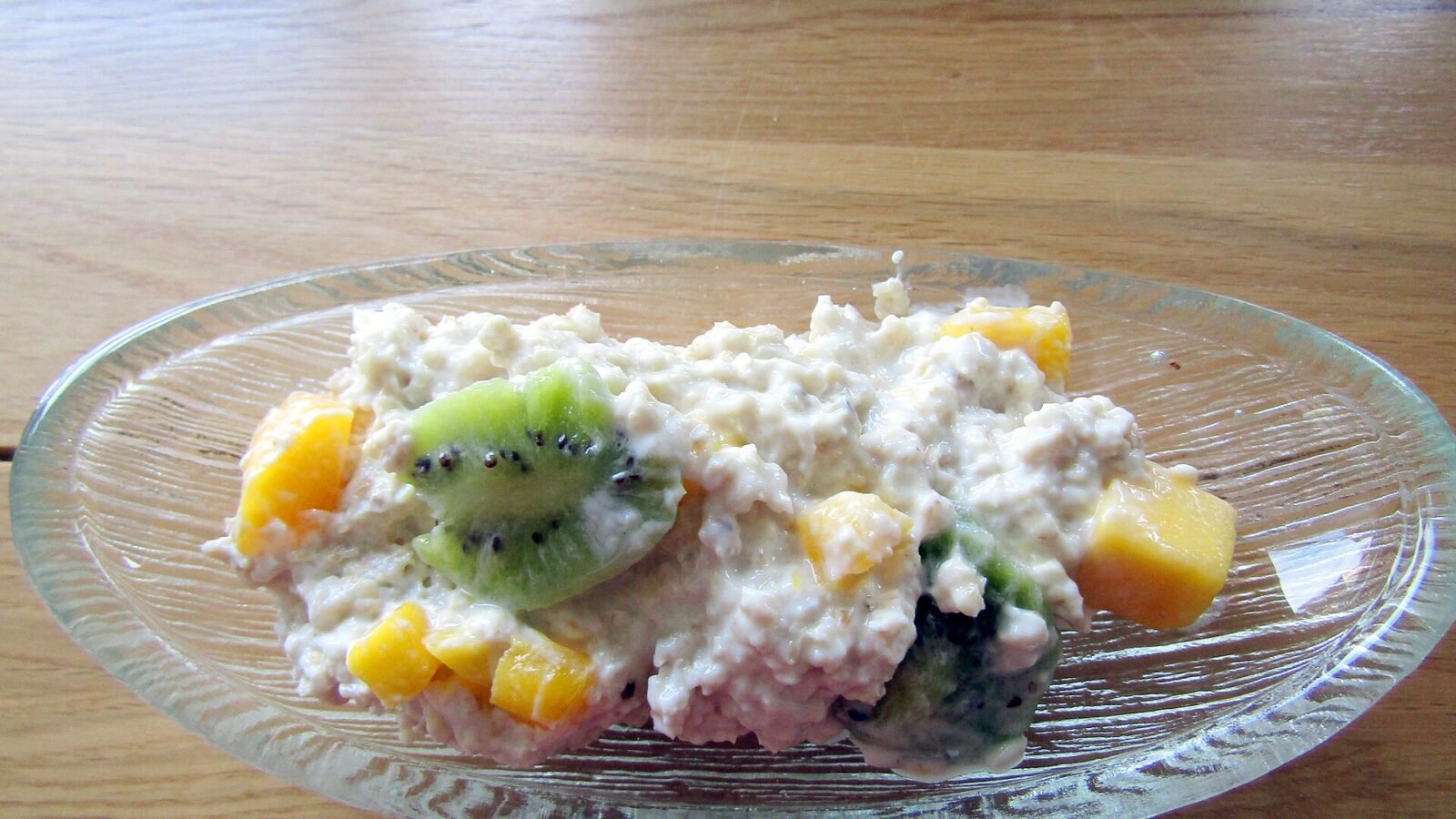
Overnight oats are rolled oats soaked in liquid overnight so they soften without cooking, and they are one of the easiest ways to eat a high-protein breakfast on a busy morning. With the right base and add-ins — Greek yogurt, whey or plant protein, cottage cheese, chia, peanut butter, sattu or roasted chana — you can reach 25g of protein or more per jar. You assemble them in five minutes the night before, and breakfast is ready when you wake up.
This guide gives you a repeatable base formula, five complete make-ahead recipes with approximate nutrition, a protein comparison table, and clear food-safety rules for keeping jars fresh for three to four days.
Medical Disclaimer: This article is for informational and educational purposes only and does not constitute medical advice. Nutrition values are approximate and depend on brands and portion sizes. Always consult a qualified healthcare professional before making changes to your diet, supplements, exercise or treatment plan.
Why Overnight Oats Work for Busy Mornings
Rolled oats are already a good breakfast base: they provide slow-digesting carbohydrates and beta-glucan, a soluble fibre that supports heart health and steadier blood sugar. Soaking them overnight softens the texture, so you can eat them cold with no cooking and no last-minute decisions.
That convenience matters. Research on breakfast habits suggests that people who eat a protein-rich morning meal tend to report better appetite control and less mid-morning snacking than those who eat a carbohydrate-heavy one. Overnight oats are simply a reliable format for getting protein and fibre in before the day gets busy.
They are also genuinely portable. Unlike a cooked breakfast, a sealed jar travels well to work, college or the gym, and it can be eaten straight from the fridge. If you want more morning protein options beyond oats, see these high-protein breakfast foods.
The Base Formula
Once you know the ratio, you can build any flavour. A standard single-serving jar is built on the components below, combined and refrigerated overnight.
| Component | Amount | Approx. protein | Role |
|---|---|---|---|
| Rolled oats | 40g | 5g | Base, slow carbs, fibre |
| Milk (dairy or soy) | 150ml | 4–8g | Soaking liquid, protein |
| Greek yogurt or curd | 150g | 10–15g | Creaminess, protein |
| Chia seeds | 10g | 2g | Thickener, fibre, omega-3 |
| Whey or plant protein | 30g | 20–24g | Protein boost |
| Peanut butter | 16g | 7g | Healthy fat, protein |
Stir everything together, seal the jar and refrigerate. The oats need at least four hours, and overnight is ideal.
Protein-Boosting Add-Ins
Plain oats and milk alone land around 9–10g of protein, so the add-ins do the heavy lifting. The most effective options are:
- Greek yogurt or hung curd — the easiest everyday boost, roughly 10g per 100g.
- Whey or plant protein powder — the largest single boost; add 20–24g per scoop.
- Cottage cheese or paneer — blended cottage cheese gives a smooth texture and about 11g per 100g.
- Milk, soy milk or milk powder — soy milk is closest to dairy for protein; a tablespoon of skim milk powder adds a couple of grams.
- Chia, flax and hemp seeds — modest protein plus fibre and healthy fats.
- Peanut butter or almond butter — about 7g per two tablespoons.
- Roasted chana or dal powder — an affordable Indian protein source, roughly 20g per 100g.
- Sattu — roasted gram flour, traditionally mixed into drinks, works surprisingly well in sweet or savoury oats.
Vegetarian eaters can hit high numbers without powder; our high-protein vegetarian meals show the same principles applied to full meals.
Five High-Protein Overnight Oats Recipes
Each recipe makes one serving. Nutrition values are approximate and depend on your brands.
1. Mango Cardamom Greek Yogurt Oats (about 26g protein)
Ingredients: 40g rolled oats; 150ml low-fat milk; 150g plain Greek yogurt; 1 tbsp chia seeds; 75g diced ripe mango; 1/4 tsp ground cardamom; pinch of salt; optional 1 tsp honey.
Method: Mix oats, milk, yogurt, chia and cardamom in a jar. Refrigerate overnight. Top with mango before eating.
Approximate per serving: 445 kcal, 26g protein, 58g carbs, 12g fat, 8g fibre.
2. Chocolate Peanut Butter Protein Oats (about 42g protein)
Ingredients: 40g rolled oats; 150ml milk; 1 scoop (30g) chocolate whey or plant protein; 1 tbsp peanut butter; 1 tbsp unsweetened cocoa powder; 1 tsp chia seeds; pinch of salt.
Method: Whisk protein powder into the milk first to avoid clumps, then combine with the rest. Refrigerate overnight.
Approximate per serving: 505 kcal, 42g protein, 55g carbs, 18g fat, 8g fibre.
3. Sattu and Roasted Chana Oats (about 29g protein)
Ingredients: 40g rolled oats; 200ml milk or soy milk; 2 tbsp sattu; 2 tbsp roasted chana powder; 1 tbsp chia seeds; 2 chopped dates; 1 tbsp peanut butter; pinch of black salt and cardamom.
Method: Combine all ingredients, mashing the dates slightly. Refrigerate overnight; stir before eating.
Approximate per serving: 520 kcal, 29g protein, 62g carbs, 14g fat, 10g fibre.
4. Cottage Cheese and Berry Oats (about 29g protein)
Ingredients: 40g rolled oats; 150ml milk; 150g low-fat cottage cheese (or blended paneer); 1 tbsp chia seeds; 1/2 cup mixed berries; 1/2 tsp vanilla; pinch of salt.
Method: Blend the cottage cheese briefly for a smoother texture, then mix with the oats and milk. Top with berries in the morning.
Approximate per serving: 445 kcal, 29g protein, 55g carbs, 11g fat, 9g fibre.
5. Ragi, Date and Almond Oats (about 27g protein)
Ingredients: 30g rolled oats; 15g ragi (finger millet) flour; 150ml milk; 150g Greek yogurt; 1 tbsp almond butter; 2 chopped dates; 1 tsp chia seeds; pinch of cinnamon.
Method: Stir the ragi flour into the milk until smooth, then combine everything. Refrigerate overnight.
Approximate per serving: 520 kcal, 27g protein, 60g carbs, 15g fat, 9g fibre.
Recipe Comparison Table
| Recipe | Protein | Carbs | Fat | Calories | Main protein source |
|---|---|---|---|---|---|
| Mango Cardamom Greek Yogurt | 26g | 58g | 12g | 445 | Greek yogurt |
| Chocolate Peanut Butter Protein | 42g | 55g | 18g | 505 | Whey/plant protein |
| Sattu and Roasted Chana | 29g | 62g | 14g | 520 | Sattu, chana, soy milk |
| Cottage Cheese and Berry | 29g | 55g | 11g | 445 | Cottage cheese |
| Ragi, Date and Almond | 27g | 60g | 15g | 520 | Greek yogurt |
Batch Prep and Food Safety
Overnight oats are a natural meal-prep food. Assemble three or four jars at once, label them with the date, and keep them at the back of the fridge where the temperature is most stable.
- Refrigerate immediately. Do not leave jars at room temperature for more than two hours.
- Eat within three to four days. Beyond that, texture and safety decline.
- Add crunchy toppings in the morning. Nuts, seeds and fresh fruit stay better when added just before eating.
- Use clean jars and clean spoons. Contamination shortens shelf life.
- Trust your senses. Discard any jar that smells sour, looks fizzy or shows mould.
These steps follow the same everyday hygiene principles behind the WHO’s food safety guidance. If you prep multiple protein recipes together, our high-protein meal prep recipes cover the wider workflow.
Indian Flavours and Ingredient Swaps
Overnight oats adapt easily to Indian palates and pantry staples. Try alphonso mango in summer, cardamom and pistachio, or dates instead of refined sugar. Sattu and roasted chana powder add protein and a nutty flavour, while ragi brings calcium and fibre.
If you avoid dairy, use lactose-free milk, soy milk or a pea-protein milk plus a plant protein powder. Thick coconut yogurt works but adds saturated fat. For nut allergies, replace peanut or almond butter with sunflower seed butter, roasted chana powder or extra seeds. Always check labels for cross-contamination if the allergy is severe.
The oats themselves bring fibre that feeds gut bacteria; our high-fibre diet guide explains how to build on that. If you prefer a savoury cottage cheese base, see these high-protein cottage cheese recipes.
Who Should Watch Portions
- People with diabetes: oats still contain carbohydrate. Pair them with protein and fat, choose unsweetened versions, and watch added dates, jaggery and honey. Portion size matters more than the label “healthy.” For another Indian breakfast comparison, read is poha good for diabetics.
- People with kidney disease: oats, dairy, nuts and seeds are high in potassium and phosphorus; protein targets may need medical guidance.
- Anyone managing weight: the recipes above range from about 445 to 520 kcal, which is a full breakfast, not a snack.
- People with IBS or FODMAP sensitivity: large oat and chia portions can cause bloating; start smaller.
- People with coeliac disease or gluten sensitivity: use certified gluten-free oats, as standard oats are often cross-contaminated.
Practical Recommendations
- Start with the base formula and one protein add-in, then adjust to your taste.
- Prep three jars at a time to make the habit realistic.
- Choose unsweetened yogurt and milk, and sweeten with fruit or dates.
- Add a source of healthy fat such as chia, flax or nut butter for satiety.
- Label jars with the date and eat within four days.
- Keep fresh and crunchy toppings separate until morning.
- Rotate flavours through the week so you do not get bored.
- If you use protein powder, check that it is third-party tested.
Risks and Limitations
The main risks are food-safety related rather than nutritional. Warm jars, dirty containers or leaving oats out too long can allow bacterial growth. Nutrition labels also vary widely: a “serving” of granola or sweetened yogurt can add far more sugar than expected.
On the benefit side, evidence for overnight oats specifically is limited; most support comes from broader research on oats, fibre and protein-rich breakfasts. A high-protein, high-fibre breakfast is a sound choice, but not a shortcut to weight loss or better blood sugar on its own.
When to Seek Professional Advice
Speak to a doctor or registered dietitian if you have diabetes, kidney disease, a diagnosed allergy, coeliac disease, or a history of disordered eating, before making overnight oats a daily habit. Seek prompt care if you develop vomiting, diarrhoea or fever after eating a stored jar, as this may indicate food poisoning.
Frequently Asked Questions
Can overnight oats really have 25g of protein?
Yes. Oats and milk provide roughly 9g, so adding Greek yogurt, cottage cheese or a scoop of protein powder easily pushes a serving past 25g. The recipes here range from about 26g to 42g.
Are overnight oats healthy or just convenient?
Both. They combine slow-digesting carbohydrates, fibre and, when built well, a solid dose of protein. The health benefits depend on what you add — unsweetened yogurt and fruit are very different from syrups and sweetened spreads.
How long do overnight oats last in the fridge?
About three to four days when refrigerated promptly in a clean, sealed jar. Add fresh fruit and crunchy toppings in the morning to keep them at their best.
Can I eat overnight oats if I am lactose intolerant?
Yes. Use lactose-free milk, soy milk or a plant-based milk with added protein, and choose a yogurt you tolerate. Some people with lactose intolerance handle fermented yogurt better than plain milk.
What can I use instead of peanut butter for a nut allergy?
Sunflower seed butter, roasted chana powder, sattu or extra chia and pumpkin seeds all work. Check labels for cross-contamination if your allergy is severe.
Do overnight oats need to be cooked?
No. Rolled oats soften by absorbing liquid overnight. If you prefer a warmer texture, you can warm them gently in the morning, but do not boil the yogurt or protein powder.
Are overnight oats good for diabetes?
They can fit, but they are not a free food. Pair them with protein and fat, avoid added sugars, watch portions and monitor your blood glucose response. A dietitian can tailor the carbohydrate amount to your needs.
References
- World Health Organization. “Healthy Diet.” WHO Fact Sheet, 2020. https://www.who.int/news-room/fact-sheets/detail/healthy-diet
- World Health Organization. “Food Safety.” WHO Fact Sheet, 2022. https://www.who.int/news-room/fact-sheets/detail/food-safety
- National Institute of Diabetes and Digestive and Kidney Diseases. “Diabetes Diet, Eating, and Physical Activity.” https://www.niddk.nih.gov/health-information/diabetes/overview/diet-eating-physical-activity
- National Institute of Diabetes and Digestive and Kidney Diseases. “Healthy Eating and Physical Activity for Life.” https://www.niddk.nih.gov/health-information/weight-management/healthy-eating-physical-activity-for-life
- NHS. “How to Eat a Balanced Diet.” https://www.nhs.uk/live-well/eat-well/how-to-eat-a-balanced-diet/
- PubMed (U.S. National Library of Medicine). Search results for “overnight oats.” https://pubmed.ncbi.nlm.nih.gov/?term=overnight+oats
Related Reading:




Leave a Reply