

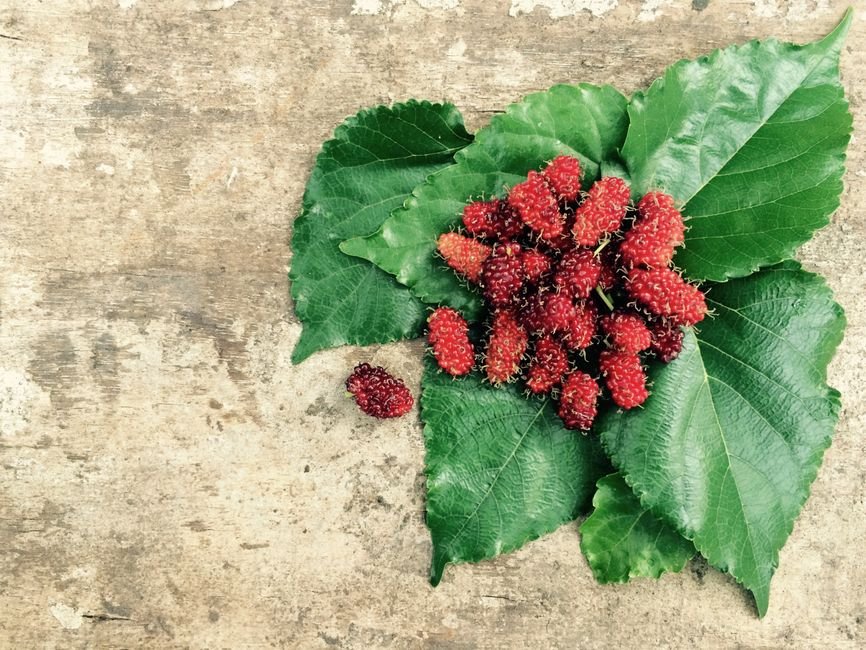
Mulberries are often overlooked compared to more mainstream berries, yet they offer a distinctive nutrient profile with genuine research support for eye health and blood sugar management specifically.
Mulberry Nutrition Profile
A 100g serving of mulberries provides roughly 43 calories, 1.7g fiber, 36% of the daily vitamin C requirement, along with vitamin K, iron, and potassium, and a distinctive anthocyanin antioxidant profile responsible for their deep purple color.
Mulberry and Eye Health
Mulberries contain zeaxanthin, a carotenoid that accumulates in the retina and is associated with reduced risk of age-related macular degeneration, alongside anthocyanins that support healthy blood flow to the eyes and may help protect against oxidative damage from UV exposure.
Mulberry and Blood Sugar Management
Mulberry leaves (distinct from the fruit) contain a compound called deoxynojirimycin (DNJ), which inhibits an enzyme involved in carbohydrate breakdown, slowing sugar absorption after meals. Several clinical studies support mulberry leaf extract’s effectiveness for reducing post-meal blood glucose spikes, making it a well-supported complementary option for blood sugar management, distinct from the fruit’s more general antioxidant benefits.
Additional Evidence-Based Benefits
Heart Health
Mulberry’s anthocyanins have shown LDL-cholesterol-lowering effects in some studies, complementing its broader cardiovascular benefit profile.
Antioxidant Protection
Mulberries rank favorably among berries for antioxidant content, contributing to overall protection against oxidative stress.
Immune Support
Their vitamin C content supports immune cell function, similar to other vitamin C-rich fruits.
How to Incorporate Mulberries
Fresh mulberries can be eaten plain, added to yogurt or oatmeal, or blended into smoothies. Dried mulberries offer a convenient, shelf-stable alternative, though as with most dried fruit, portion control matters more due to concentrated sugar content. Mulberry leaf extract, available as a supplement, is the more targeted option specifically for blood sugar support.
Frequently Asked Questions
Is mulberry fruit or mulberry leaf better for blood sugar?
Mulberry leaf extract, containing the compound DNJ, has stronger, more specific clinical research support for reducing post-meal blood glucose spikes compared to the fruit itself, which offers more general antioxidant and nutrient benefits.
Can mulberries really improve eyesight?
Mulberries contain zeaxanthin, a carotenoid that supports eye health and is linked to reduced risk of age-related macular degeneration. However, they support long-term eye health rather than providing an immediate improvement in vision.
Are dried mulberries as healthy as fresh?
Dried mulberries retain much of the fruit’s fiber and antioxidant content but are more concentrated in sugar and calories per gram due to water removal, so portion control matters more than with fresh mulberries.
Subscribe Free →




Leave a Reply